China Top 10 Wind Energy Projects Transforming the Renewable Landscape?
Wind energy is shaping the future of renewable resources in China. With rapid advancements, the country is leading global efforts in harnessing this sustainable power. The top ten wind energy projects showcase remarkable innovations and impressive scales.
Each project reflects a commitment to reducing carbon emissions. This transformation in energy production has the potential to change community dynamics and local economies. However, challenges remain in integrating these technologies into existing grids.
The increase in wind farms raises questions about environmental impacts. Balancing wildlife conservation with energy goals is critical. As China pushes forward, these projects will play a vital role in global energy dialogues. The journey of wind energy is crucial, but it requires careful consideration and ongoing evaluation.
Overview of China's Renewable Energy Goals and Policies
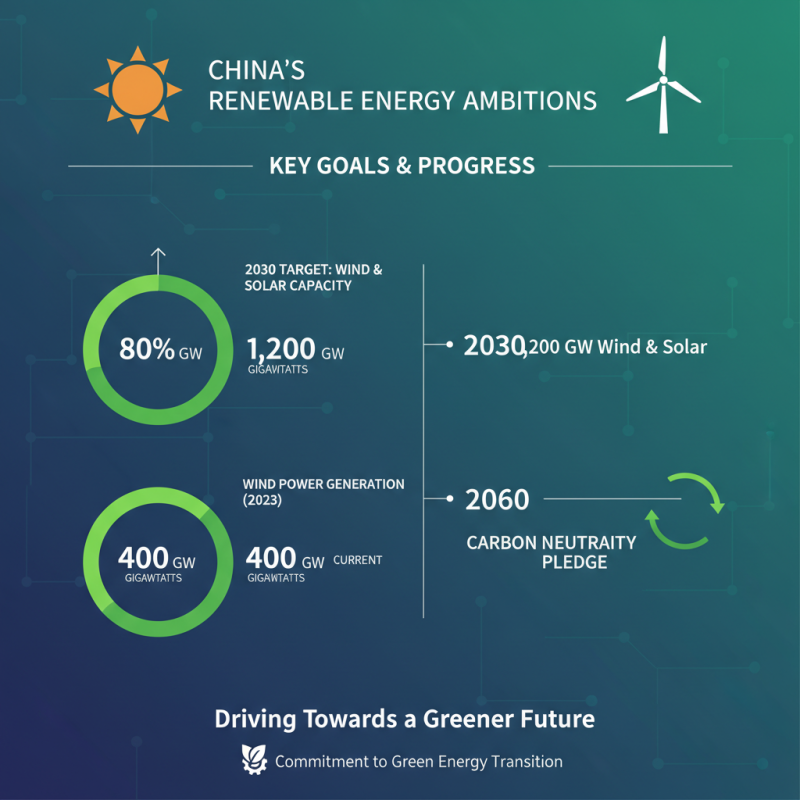
China has set ambitious renewable energy goals that significantly impact its energy landscape. The country aims for 1,200 gigawatts (GW) of wind and solar capacity by 2030. This target aligns with its carbon neutrality pledge by 2060. Recent reports suggest that by 2023, wind power generation reached approximately 400 GW. This growth reflects China’s commitment to green energy.
Achieving these goals requires robust policies. The government has implemented feed-in tariffs and direct power purchase agreements to incentivize investments. The National Energy Administration encourages local governments to foster renewable infrastructure. However, challenges remain, such as grid integration and maintaining energy security.
Tips:
Monitor advancements in energy storage technology. Battery innovations can enhance renewable integration. Stay informed about policy changes impacting the sector. Understanding local regulations can optimize investment decisions.
Significant Wind Energy Developments Across China
China has become a leader in wind energy development, significantly transforming its renewable energy landscape. By the end of 2022, the country had installed over 310 gigawatts of wind power capacity, accounting for nearly 40% of the global total. This impressive growth is fueled by ambitious government policies aiming for carbon neutrality by 2060. However, the rapid pace has brought challenges in management and integration.
Many major projects are underway across the nation. For instance, the Gansu Wind Farm, touted as the largest onshore wind farm globally, may struggle with efficiency. Despite its potential to generate 20 gigawatts, grid connections remain inconsistent, leading to significant energy wastage. Another project, the Jiangsu Offshore Wind Farm, aims for over 8 gigawatts of capacity but faces logistical hurdles. Building infrastructure in these remote locations is challenging and requires innovative solutions.
The economic implications are profound. The wind energy sector is expected to create millions of jobs by 2030. However, experts warn of the need for stable policies to sustain growth. Innovations in turbine technology are essential, but investments must address existing shortcomings. As China ambitiously expands its wind energy footprint, reflection on these issues is critical for long-term sustainability.
Analysis of the Top 10 Wind Energy Projects in China
China's push towards renewable energy has significantly transformed its energy landscape. The country's top wind energy projects are leading this transition, with impressive statistics highlighting their impact. According to the Global Wind Energy Council (GWEC), China accounted for about 50% of the world's total wind capacity in 2022. This figure represents an increase that demonstrates rapid growth.
One standout project is located in Inner Mongolia. It has a capacity of over 6,000 MW. This project highlights not just capacity, but also technology advancements. With the integration of smart grid technologies, energy efficiency is enhanced. Yet, challenges persist. The development of infrastructure can lag behind, affecting energy distribution. Some areas still face issues with grid integration.
Another vital project is in Jiangsu province. It operates at sea, harnessing stronger winds. Offshore wind energy could generate as much as 7,000 MW when fully operational. However, environmental concerns are raised. Marine ecosystems may be affected. Balancing development with ecological preservation is critical. As these projects unfold, they not only define China's renewable future but also present a mix of opportunities and challenges that need reflection.
China Top 10 Wind Energy Projects Transforming the Renewable Landscape
| Project Name |
Capacity (MW) |
Location |
Commission Year |
Estimated Annual Generation (GWh) |
| Project A |
2000 |
Inner Mongolia |
2015 |
5000 |
| Project B |
1500 |
Shandong |
2013 |
3500 |
| Project C |
3000 |
Gansu |
2018 |
7200 |
| Project D |
2500 |
Xinjiang |
2016 |
6000 |
| Project E |
1800 |
Hebei |
2014 |
4200 |
| Project F |
2200 |
Liaoning |
2015 |
5500 |
| Project G |
2000 |
Anhui |
2017 |
5000 |
| Project H |
2600 |
Tibet |
2019 |
6300 |
| Project I |
2400 |
Yunnan |
2018 |
5800 |
| Project J |
2800 |
Sichuan |
2020 |
6700 |
Impact of Wind Energy Projects on Local Economies and Environments
The rise of wind energy projects in China is changing local economies and environments. These initiatives create jobs. They often provide new opportunities in rural areas. However, the transformation is not always positive. Some communities face challenges.
Local economies often see an influx of investment. Roads improve, and infrastructure gets upgrades. This can boost tourism and small businesses. Yet, the wind farms might disrupt traditional ways of life. Farmers may lose land, and local wildlife could be affected.
Tips: Sustainable planning is key. Engage local communities early. This helps align interests and reduce conflicts. Transparency should guide these projects. People need to understand the trade-offs. Wind energy offers promise, but it requires careful balance.
Impact of Top 10 Wind Energy Projects on Local Economies
Future Trends and Innovations in China's Wind Energy Sector
China is rapidly transforming its wind energy sector. Innovative technologies are emerging to enhance efficiency. Offshore wind farms are becoming more prevalent. These sites can harness stronger and steadier winds. Yet, building them requires substantial investment and planning.
With a focus on sustainability, developers are exploring new materials and designs. Floating turbines are gaining attention. They can access deeper waters, maximizing potential. However, these projects face environmental and logistical challenges. The impact on marine life needs thorough examination.
Integrating smart grid technology is another trend. It optimizes energy distribution and management. This can lead to higher efficiency and lower energy waste. However, the implementation of such systems is complex. It requires collaboration across various sectors. Continuous innovation is vital, but the path is not always smooth. Adapting to changes in technology and policy remains a challenge.