How to Choose the Right Wind Turbines for Your Energy Needs?
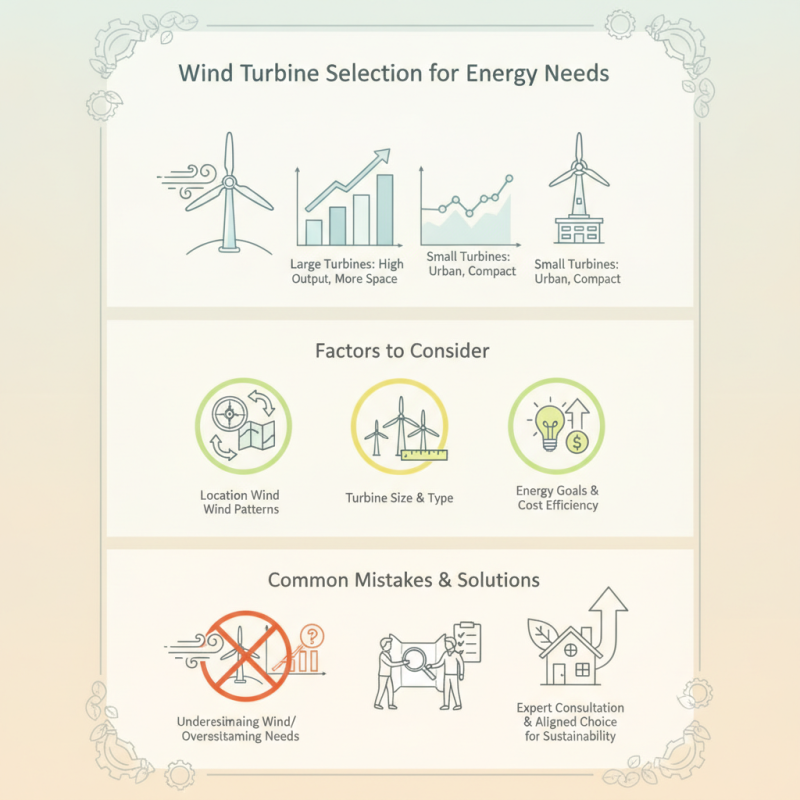
Choosing the right wind turbines for your energy needs is a crucial decision. As the industry expert Dr. Emily Zhang states, “Selecting the right turbine can greatly enhance efficiency and reduce costs.” Her insights reflect the complexities involved in the selection process. Factors like location, turbine size, and energy goals play vital roles.
Wind turbines come in various sizes and designs. Each type has its specific advantages, depending on your circumstances. For instance, larger turbines can capture more wind energy but require more space. Smaller turbines may fit better in urban settings. Understanding your unique needs can create a more informed choice.
It's common to feel overwhelmed when navigating turbine options. Mistakes can happen, such as underestimating wind patterns or overestimating energy needs. Therefore, careful evaluation of all variables is essential. Seeking expertise can lead to better outcomes. Hence, aligning your choice with genuine energy requirements is not just practical; it’s necessary for a sustainable future.
Understanding Your Energy Requirements
Understanding your energy requirements is essential when selecting wind turbines. Start by assessing your current energy consumption. Look at your electricity bills for the last year. This will give you a clear picture of your monthly needs. Note the peak usage times and seasonal variations.
Tips: Calculate your average daily energy use. Consider future energy demands, especially if you plan to expand your facility. Establish whether a small or large turbine suits your needs.
Another factor is wind availability in your location. Use online resources or local meteorological data to evaluate average wind speeds. This data helps in determining the turbine's efficiency. Not every site is ideal for wind energy.
Tips: Explore various turbine sizes and designs. Some may perform better in low wind areas. Factor maintenance costs and energy production goals into your decision. Sometimes, more research is needed to find the best fit.
Energy Needs Analysis for Wind Turbine Selection
Types of Wind Turbines and Their Applications
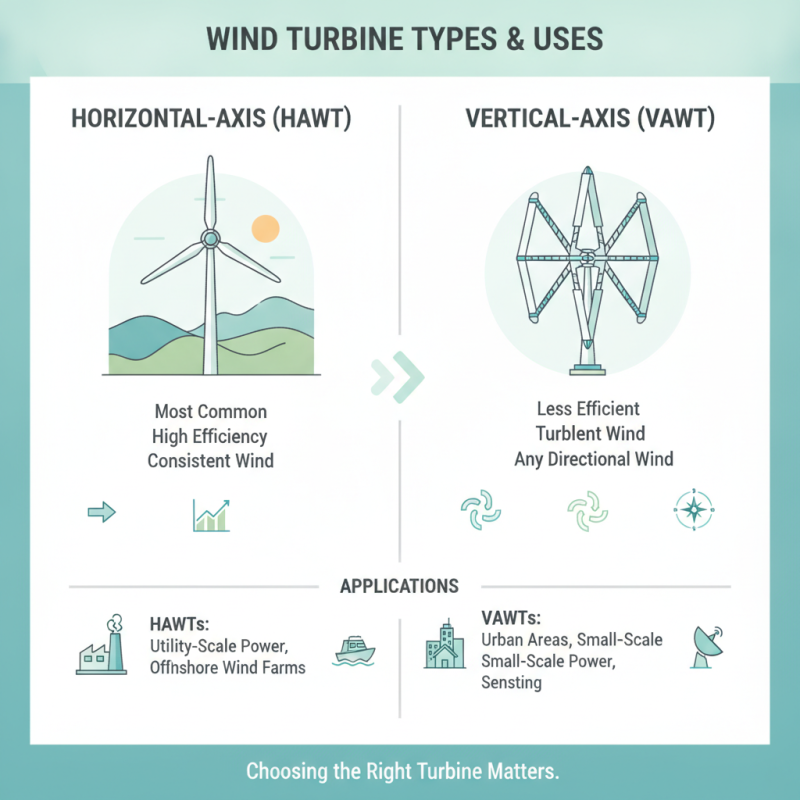
When selecting the right wind turbines, understanding their types and applications is crucial. There are primarily two categories: horizontal-axis wind turbines (HAWTs) and vertical-axis wind turbines (VAWTs). HAWTs are the most common, generally offering higher efficiency and better performance in various wind conditions. In contrast, VAWTs, while less efficient, have their advantages. They can operate in turbulent winds and are less affected by wind direction.
According to the Global Wind Energy Council, the wind energy capacity reached over 750 GW globally in 2021. HAWTs accounted for around 90% of this capacity. These turbines are ideal for large-scale wind farms, producing significant energy. VAWTs, however, are suitable for urban areas due to their smaller footprint and quieter operation.
Tip: Evaluate your location's wind profile before choosing. A detailed site assessment can reveal which turbine type will perform best. Installing a smaller VAWT might suit your needs if your area has inconsistent wind patterns. Consider your energy requirements carefully, as the wrong choice could result in underperformance. Investing in the correct turbine type is essential to maximize efficiency and return on investment.
Evaluating Site Conditions for Wind Turbine Installation
When evaluating site conditions for wind turbine installation, start by assessing the wind resource. Measuring wind speed and direction at various heights is crucial. An anemometer can provide accurate data. Ideally, a site should have an average wind speed of at least 5.5 m/s. This threshold is often necessary for effective energy production. The topography of the land also plays a vital role. Flat areas generally allow for better wind flow compared to hilly terrains.
Another critical factor is the proximity to existing infrastructure. Consider the distance to power lines and access roads. This can affect installation costs. Soil quality is also essential. It needs to support heavy turbine bases. Weak soil may lead to instability, requiring additional foundation work. Evaluate local regulations, too. Zoning laws can restrict turbine placement. A thorough site analysis can uncover both opportunities and challenges you might not initially expect.
Finally, wildlife and environmental impact concerns should be part of the consideration. Turbines can disrupt local ecosystems. Engaging with environmental experts may offer insights that ensure compliance and minimize adverse effects. Balancing energy needs with environmental stewardship can create a more sustainable installation process.
How to Choose the Right Wind Turbines for Your Energy Needs? - Evaluating Site Conditions for Wind Turbine Installation
| Site Condition |
Wind Speed (m/s) |
Turbine Height (m) |
Turbine Capacity (kW) |
Estimated Energy Production (MWh/year) |
| Coastal Area |
8.0 |
120 |
2500 |
6000 |
| Rural Farmland |
6.5 |
100 |
1500 |
2000 |
| Hilltop Location |
7.2 |
80 |
2000 |
3500 |
| Urban Area |
5.0 |
50 |
1000 |
800 |
| Mountainous Area |
9.0 |
140 |
3000 |
7000 |
Assessing Cost-Effectiveness and Long-Term Benefits
Choosing the right wind turbines for your energy needs involves careful consideration of cost-effectiveness and long-term benefits. Initial investment can be substantial, yet operational costs are often lower than traditional energy sources. Potential savings in energy bills can be significant over time. Evaluating your energy consumption will help determine the capacity you require. Smaller turbines work well for residential use, while larger setups are ideal for industrial applications.
Long-term benefits extend beyond finances. Wind energy contributes to sustainability. By reducing your carbon footprint, you support a cleaner environment. Turbines typically have a lifespan of 20 to 25 years, providing stable returns on investment. However, issues like maintenance and environmental impact should not be overlooked. Local regulations can affect installation and operation. Failure to account for these factors can lead to unexpected costs.
Understanding the local wind conditions is crucial. Consistent wind speeds ensure optimal performance. A site analysis may be necessary to gather accurate data. While projections can help, real-world assessments can reveal challenges. Despite the uncertainties, the transition to wind energy can be rewarding. Careful planning and research will drive effective decisions.
Regulatory Considerations and Incentives for Wind Energy
When considering wind turbines, it's crucial to navigate the regulatory landscape. Regulations vary by region and can influence your project’s costs and viability. Understanding local zoning laws and environmental assessments is essential. These regulations ensure that your wind energy project aligns with community standards and ecological protections. It may seem time-consuming, but thorough research can prevent costly surprises.
Tips: Engage with local authorities early. They can offer insights into any restrictions or incentives available. Knowing the policies will help you craft a compliant and successful project.
Incentives for wind energy can significantly impact your budget. Many governments provide tax credits, grants, and rebates to stimulate renewable energy investments. These financial incentives can alleviate installation costs and enhance your return on investment. However, the availability of such incentives may change, making it vital to stay updated.
Tips: Regularly check government websites for incentive announcements. Staying informed will give you a competitive edge when planning your wind energy project.