What is a Cooling Tower and How Does It Work?
A cooling tower is a critical component in industrial and commercial settings. According to the U.S. Department of Energy, these systems account for up to 30% of industrial energy use. Cooling towers help remove excess heat, enabling efficient processes in power plants, refineries, and HVAC systems.
In its operation, a cooling tower relies on water and air interaction to lower the temperature of circulating fluids. The data from the American Society of Mechanical Engineers indicates that properly designed cooling towers can improve energy efficiency by up to 20%. However, suboptimal designs or maintenance can lead to significant inefficiencies, wasting both water and energy.
Despite their importance, many operating cooling towers face challenges. Issues such as scaling, corrosion, and inadequate airflow can reduce their performance. Industry experts stress the need for regular inspections and maintenance, highlighting that many cooling towers are neglected. This neglect can lead to greater resource consumption and increased operational costs. Understanding the role and function of cooling towers is vital for improved sustainability and efficiency in various sectors.
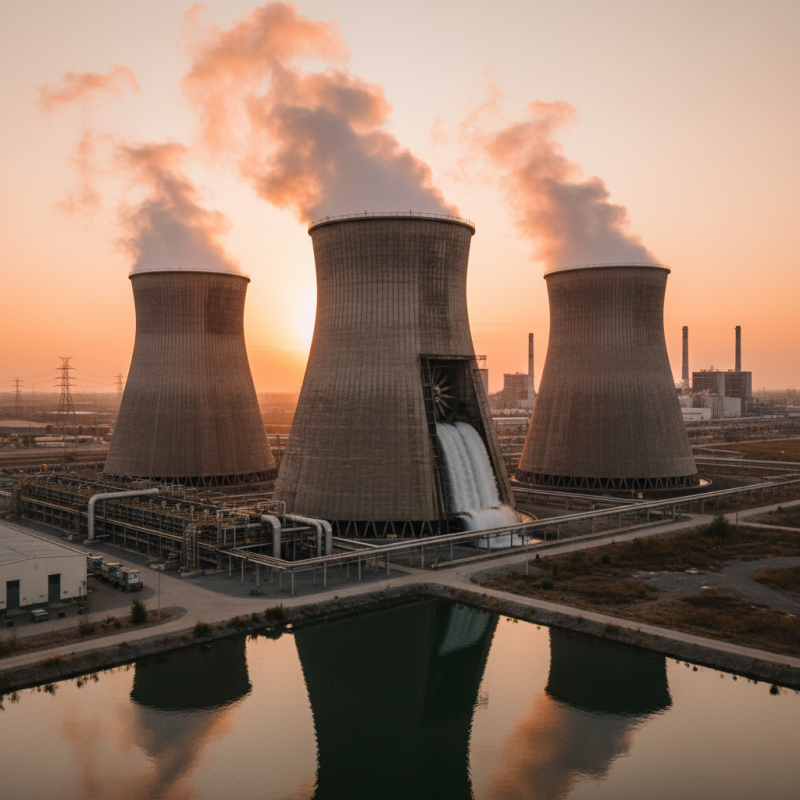
What is a Cooling Tower?
Cooling towers play a crucial role in industrial operations. They serve as heat exchangers, removing excess heat from water used in various processes. This process helps maintain optimal temperatures in machinery and cooling systems. According to the U.S. Department of Energy, these towers can significantly reduce energy consumption, improving overall efficiency.
The design of cooling towers can vary widely. They can be either natural draft or mechanical draft. Natural draft towers rely on temperature differences to circulate air, while mechanical towers use fans. The efficiency of these systems is impacted by several factors, including ambient temperature and humidity levels. Furthermore, the cooling efficiency can drop by up to 20% if not maintained properly. Regular maintenance is essential to ensure optimal performance.
Data from the International Energy Agency suggests that improperly functioning cooling towers contribute to a significant amount of energy waste. It’s estimated that 10% of a facility's energy loss can be attributed to cooling inefficiencies. Understanding how cooling towers function and the factors that influence their performance can help industries make necessary improvements. Regular monitoring and adjustments can lead to better energy practices and reduced environmental impact.
The Basic Principle of Cooling Tower Functionality
Cooling towers play a crucial role in many industrial processes. They help regulate temperatures by dissipating heat from water. This heat is usually generated during cooling systems, like air conditioning or manufacturing. The basic principle of cooling tower functionality revolves around water evaporation.
As water moves through the cooling tower, it creates a contact with air. This exchange promotes evaporation. While some water evaporates, the remaining water cools down. This process effectively lowers the temperature of the water being circulated. It's essential. However, not all cooling towers operate perfectly. Sometimes, the efficiency drops due to dirt build-up or mechanical issues.
Even with regular maintenance, problems can arise. Broken fans or clogged nozzles can hinder operation. These issues highlight the need for constant check-ups. Balancing efficiency and maintenance is critical for optimal performance. Ensuring that the cooling tower functions properly requires diligence and attention to detail.
Cooling Tower Temperature Performance
Types of Cooling Towers and Their Uses
Cooling towers are critical components in various industrial processes. They help regulate temperatures in power plants, manufacturing facilities, and large buildings. There are several types of cooling towers, each serving unique purposes. For instance, open-circuit cooling towers use water to absorb heat directly from the system, while closed-circuit towers circulate water in a sealed system.
Some cooling towers are designed for specific climates. Natural draft towers rely on convection to move air and use tall structures to enhance airflow. On the other hand, mechanical draft towers use fans to increase air movement, making them more versatile.
Hybrid cooling towers combine both methods, aiming for maximum efficiency. However, these systems can be complex and might need regular maintenance. Selecting the right type greatly impacts energy efficiency and operational costs. Misjudgments can lead to excess energy use, resulting in higher bills.
The choice also affects cooling capacity. Careful consideration is essential to avoid costly errors. As technology evolves, new designs are being introduced. Staying informed can be challenging but is necessary for optimal performance.
Components of a Cooling Tower and Their Functions
Cooling towers are essential in many industrial processes. They help manage excess heat by using water. The primary components of a cooling tower work together to ensure efficiency.
The fill material is a crucial part of this system. It increases the water's surface area, promoting better heat exchange. As water trickles down, air flows upward. This creates an effective cooling process. Fans also play a critical role. They draw air into the tower, enhancing evaporation. Without sufficient airflow, cooling becomes less efficient.
Makeup water is another important element. This water compensates for losses due to evaporation. Monitoring water levels is vital. Not enough water can lead to overheating, while too much can disrupt operation. The distribution system ensures even flow throughout the fill. If uneven, some areas may cool inefficiently. Understanding these components can improve cooling tower performance significantly. Each part has its unique function, contributing to the overall system.
Applications and Benefits of Cooling Towers in Industry
Cooling towers play a crucial role in various industrial applications. They are essential for managing the heat produced during manufacturing processes. In fact, about 70% of cooling in power plants relies on these systems. They save energy and reduce operational costs, which is vital for sustainability.
Industries like chemical manufacturing and oil refining depend on cooling towers. These systems help maintain optimal temperatures in reactors and cooling processes. Studies show that implementing efficient cooling towers can reduce energy consumption by up to 30%. This reduction can lead to significant cost savings over time.
However, the use of cooling towers isn't without challenges. Maintenance can be extensive and costly. Issues like scaling and corrosion can impact efficiency. Additionally, water quality must be monitored to prevent bacterial growth. Many facilities overlook this aspect, leading to potential health risks. Continuous assessment and improvement of cooling tower efficiency are necessary for future developments in industrial cooling solutions.
What is a Cooling Tower and How Does It Work? - Applications and Benefits of Cooling Towers in Industry
| Parameter | Value |
| Cooling Tower Type | Crossflow |
| Typical Capacity | 500 - 3000 tons |
| Main Application Areas | Power Plants, HVAC, Manufacturing |
| Average Efficiency | 75% - 90% |
| Water Consumption | 10-30 gallons/ton per hour |
| Typical Maintenance Frequency | Every 6 months |
| Common Materials Used | Fiberglass, Steel, Concrete |
| Environmental Considerations | Water evaporation, noise levels |