Essential Tips for Choosing Robot Lithium Batteries?
Choosing the right robot lithium battery can be challenging. Many options exist, and understanding them is crucial. Batteries power your robot, affecting everything from performance to longevity.
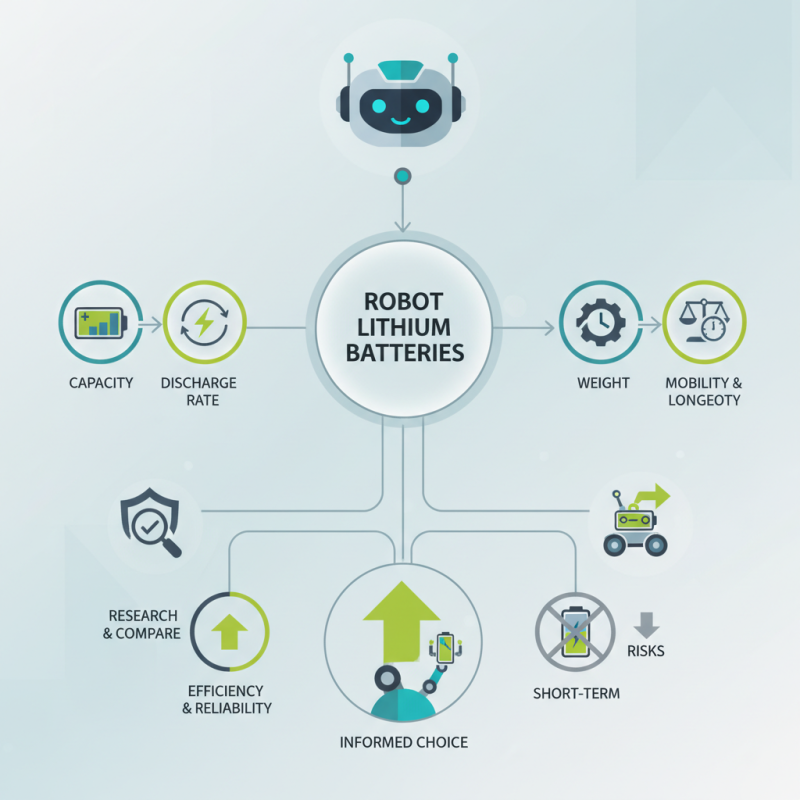
When assessing robot lithium batteries, consider factors like capacity and discharge rate. These elements significantly influence how your robot functions. A higher capacity usually means longer usage, but don't overlook the importance of weight. Heavier batteries can hinder mobility, which is vital for many robotic applications.
Additionally, remember to evaluate the battery's lifespan. Some batteries may offer short-term performance but deteriorate quickly. Make informed choices to avoid regrets later. Research and compare brands, as not all batteries are created equal. Each selection carries its own risks and rewards. Ultimately, the right choice will enhance your robot's efficiency and reliability.
Essential Specifications to Consider in Robot Lithium Batteries
When selecting lithium batteries for robots, there are key specifications to keep in mind. Voltage is crucial. Most robots operate on specific voltage ranges. Using the wrong voltage can damage components. Check your robot’s requirements carefully before buying.
Capacity is another important factor. It determines how long your robot can run on a single charge. Higher capacity means longer usage time. However, larger batteries can be heavier. This weight may affect your robot’s performance. You must balance capacity with weight.
Charging cycles should not be overlooked. Lithium batteries have a limited lifespan. Each full discharge and charge counts as one cycle. Choosing a battery with more cycles can save you money in the long run. However, be aware that lower-priced batteries may offer fewer cycles. Always consider the longevity of your investment.
Understanding Battery Chemistry for Improved Performance and Safety
When selecting lithium batteries for robots, understanding battery chemistry is crucial. Lithium-ion batteries, for instance, have a specific energy density around 150-200 Wh/kg. This high density allows for lighter designs and longer operational hours. However, the lithium polymer batteries provide similar energy but are also lighter and more flexible. It’s essential to be aware of these nuances when making choices.
Safety in battery usage relies heavily on chemistry. Lithium batteries can be volatile without proper management systems. Reports indicate that poorly managed batteries can lead to overheating, posing fire risks. A 2022 study highlighted a 30% increase in incidents related to battery failures due to inadequate temperature regulation. Noticing signs like swelling or unusual heat is important.
Moreover, some batteries may exhibit a short lifespan under heavy discharge rates. Consistent high demand affects performance. Recognizing if your application requires high discharge rates is vital. Knowledge of battery degradation over time is equally important. A lack of attention to these details can lead to decreased efficiency and potential hazards in robotics applications.
Comparative Analysis of Battery Lifespan and Cycle Durability
When selecting lithium batteries for robots, lifespan and cycle durability are crucial factors. Battery lifespan refers to how long a battery maintains its capacity. It varies across models and can impact performance. The lifespan of a good lithium battery can reach several years. However, not all batteries are created equal. Some may degrade faster under heavy usage.
Cycle durability indicates how many charge/discharge cycles a battery can endure. Higher cycle durability means a longer lifespan. Many users overlook this aspect. A battery might look great on paper but fail miserably in real-world applications. For example, cheap batteries can provide fewer cycles than claimed.
Consider the operating environment too. Extreme temperatures can shorten battery life significantly. Make sure to analyze usage patterns. Are you using the robot consistently? Or just occasionally? Small changes in usage can lead to differing results. Take time to research and compare options before making a final decision. The right battery can greatly enhance your robot's efficiency and longevity.
Essential Tips for Choosing Robot Lithium Batteries
This chart compares four different lithium batteries used in robots, showcasing their lifespan in months and their cycle durability in cycles. Understanding these metrics is crucial for selecting the right battery for robotic applications.
Evaluating Discharge Rates and Capacity for Optimal Robotics Applications
When selecting lithium batteries for robotics, evaluating discharge rates is crucial. Discharge rate determines how quickly a battery can release its energy. High discharge rates are often needed for dynamic applications, like drones or robots that require bursts of power. If the discharge rate is too low, your robot may not perform well under load. This could lead to unexpected malfunctions or reduced efficiency during operations.
Capacity also plays a significant role in battery selection. It refers to the total amount of energy a battery can store. For robots, a higher capacity means longer operational time. However, high-capacity batteries can be heavier and bulkier. This weight may affect the robot’s agility and maneuverability. A balance must be struck between capacity and weight. It's common for users to misjudge the required capacity, leading to either underperformance or overburdening the design.
Another often overlooked aspect is the chemistry of lithium batteries. Different lithium compounds can affect stability and safety. Users may find themselves grappling with issues like overheating or shorter lifespans. Constant awareness of these factors is essential for seamless operations. In pursuit of optimal performance, continually reassessing battery choice will guide users in mastering their robotics projects.
Regulatory Standards and Certification for Lithium Battery Safety
When selecting lithium batteries for robots, safety must be your top priority. Regulatory standards are designed to ensure lithium battery safety. Certifications like UL, IEC, and UN can indicate compliance with safety and performance requirements. Look for batteries that display these certifications. They signal adherence to rigorous testing and evaluation.
Always pay attention to the manufacturer's guidelines. These documents provide essential information. They explain safe usage, charging procedures, and potential hazards. Not every product meets the same safety standard. Some manufacturers may cut corners. Doing your homework helps prevent future issues.
Tips for battery selection include checking for overcharge and short-circuit protection features. These mechanisms are crucial for avoiding dangerous situations. Ensure the battery's specifications match your robotics requirements. An underpowered or overpowered battery can lead to equipment failure.
Delve into your battery options carefully. Ensure they align with both safety and performance needs.