
Why Is Sustainable Energy Important for Global Buyers?

For global buyers, sustainable energy is no longer only an environmental preference. It increasingly shapes costs, supply security, compliance, and brand credibility. The International Energy Agency reported that global clean energy investment was expected to exceed USD 2 trillion in 2024. That figure shows a major shift in capital. It also signals stronger competition for dependable renewable power, efficient equipment, and credible suppliers.

The change is visible beyond financial markets. IRENA’s Renewable Capacity Statistics 2024 recorded 473 gigawatts of renewable capacity added worldwide in 2023. Solar panels covered industrial rooftops, while wind turbines expanded across coastal and rural regions. These projects can reduce exposure to fossil-fuel price volatility. However, renewable power is not automatically simple, cheap, or available everywhere. Grid limits, storage needs, mineral sourcing, and inconsistent policy can delay purchasing decisions. That reality deserves more attention.

Buyer expectations are also becoming more measurable. The Science Based Targets initiative and the Greenhouse Gas Protocol encourage companies to quantify emissions across operations and supply chains. Meanwhile, the IPCC has identified rapid emissions reductions as essential for limiting climate risks. Reliable energy choices therefore require more than a green label. Buyers should examine lifecycle emissions, certification quality, project location, grid reliability, and supplier experience. Small details matter, such as whether renewable electricity is delivered continuously or represented only through certificates.

The evidence is strong, but uncertainty remains. No single technology solves every energy challenge. Sustainable energy matters because it connects climate responsibility with practical business resilience. For global buyers, that connection is becoming harder to ignore.
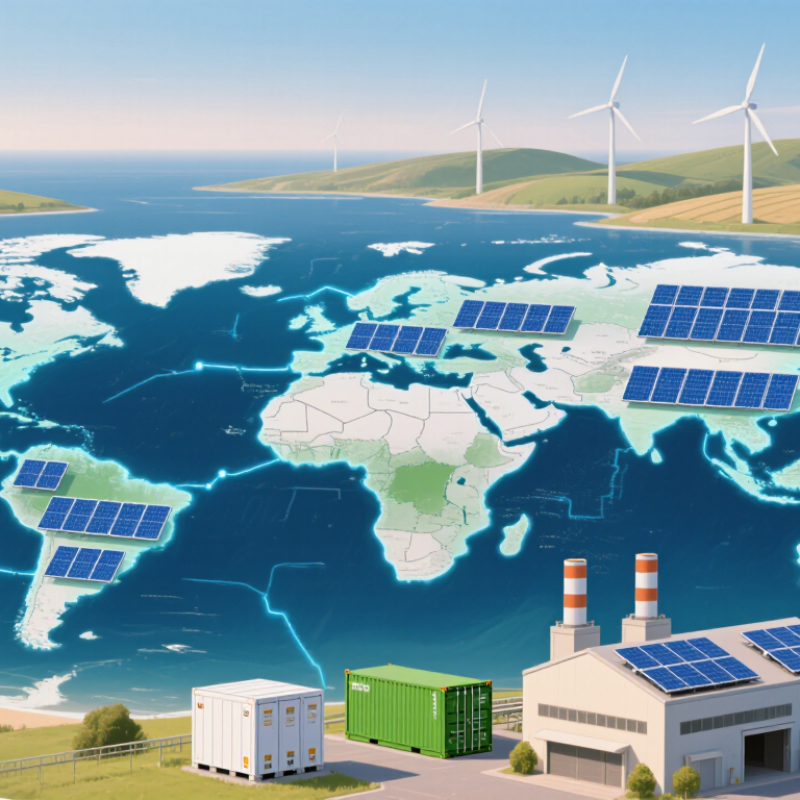
Why Is Sustainable Energy Important for Global Buyers?

What Is Sustainable Energy and How Does It Work?

Sustainable energy means producing power without exhausting resources or causing lasting environmental damage. It usually comes from sunlight, wind, moving water, geothermal heat, and sustainably managed biological materials. These sources are replenished naturally, unlike coal, oil, and gas. However, “renewable” does not always mean impact-free. Solar panels require minerals, land, manufacturing energy, and responsible end-of-life handling.

The process is practical and increasingly measurable. Solar panels convert light into direct-current electricity, while an inverter changes it into usable alternating current. Wind turbines use moving air to turn blades and drive a generator. Hydropower captures the force of flowing water. Batteries, pumped storage, and flexible grids help balance supply when sunlight fades or wind slows. Energy audits also matter. Using less power can be as valuable as generating cleaner power.

For global buyers, sustainable energy affects cost, supply security, emissions reporting, and long-term planning. A careful buyer examines the full lifecycle, including equipment materials, transport, maintenance, worker protections, and disposal. Independent certification and transparent energy data can support reliable decisions. Yet no project is perfect. Storage can be expensive, transmission lines may face local opposition, and renewable output can change hourly. Treating sustainable energy as a simple purchase would be a mistake. It is a system that requires evidence, skilled operation, and regular review.


Why Is Sustainable Energy Important for Global Buyers?

Sustainable energy matters to global buyers because purchasing decisions now affect cost, supply security, and environmental credibility. A factory powered by wind, solar, or responsibly managed hydroelectricity can reduce dependence on volatile fossil-fuel prices. This difference becomes visible when energy costs rise across international markets. It also supports buyers facing stricter carbon reporting requirements. Many procurement teams now request electricity records, emissions data, and supplier energy plans before signing contracts.

The evidence must be specific. Buyers should examine power purchase agreements, renewable energy certificates, grid information, and independent audits. A supplier claiming “green power” without dated records creates uncertainty. That happens more often than expected. Sustainable energy can also strengthen operations during fuel shortages or regional grid disruptions, especially when facilities combine renewable generation with storage. Yet renewable projects are not automatically harmless. Land use, mineral sourcing, water consumption, and community concerns require careful review. A lower carbon figure may hide other environmental costs. Buyers should compare lifecycle emissions, not only promotional targets. I have seen energy plans look impressive on paper but weaken under questions about verification and maintenance. Prices can also be higher at the beginning, while savings depend on local regulation and infrastructure. Reliable buyers therefore need practical evidence, realistic timelines, and suppliers willing to disclose weaknesses. That approach protects purchasing decisions from attractive but incomplete claims.

How Does Sustainable Energy Affect Costs and Supply Chains?

Sustainable energy changes purchasing economics long before a shipment reaches the warehouse. Solar, wind, and managed storage can reduce exposure to volatile fuel prices. For global buyers, that stability supports more accurate quotations and contract planning. Yet renewable projects often require substantial upfront investment. Equipment, grid upgrades, and financing can raise early costs. The cheaper option is not always cheaper at the beginning.

Supply chains also respond to energy reliability. A factory using predictable electricity can schedule production with fewer interruptions. Cold storage, precision machinery, and data systems depend on that consistency. When power fails, buyers may face delayed loading, damaged inventory, or expensive air freight. In practice, one missed production window can affect several suppliers, not just one purchase order. Clean energy does not remove every risk. Weather still matters, and batteries have limits.

Energy data is becoming part of supplier evaluation. Buyers may request consumption records, emissions measurements, backup plans, and maintenance evidence. These details help distinguish durable improvements from attractive claims. However, reporting quality varies across regions, and smaller suppliers may lack technical staff. That gap deserves attention. A strict requirement can improve transparency, but it can also exclude capable producers. Purchasing teams should compare total cost, delivery resilience, local grid conditions, and verified energy performance before changing a sourcing plan.

What Environmental and Social Benefits Does It Provide?

Sustainable energy can reduce the environmental burden carried by global supply chains. Wind, solar, and responsibly managed hydropower usually produce fewer operational emissions than coal or diesel generation. Cleaner electricity also improves air quality near factories, ports, and transport routes. Workers may experience fewer smoky shifts and respiratory risks. Families living nearby can benefit too.

The social benefits depend on how projects are planned and operated. Local hiring, technical training, and stable wages can strengthen communities around energy facilities. Reliable power can keep clinics, schools, and cold-storage rooms functioning after sunset. For global buyers, these outcomes matter when evaluating suppliers beyond price and delivery dates. Site visits, worker interviews, emissions records, and third-party audits provide useful evidence. Claims should be checked against measured energy use.

The benefits are not automatic. A solar panel still requires minerals, land, manufacturing, and eventual recycling. Poor planning can disturb habitats or exclude local residents from decisions. I have seen sustainability discussions focus heavily on carbon figures while overlooking wages and water use. That gap deserves attention. Buyers can request life-cycle assessments, community consultation records, safety data, and clear improvement targets. Affordable access also matters; a cleaner energy system should not push costs onto vulnerable households. Progress may be uneven. That is more credible than pretending every renewable project is perfect.

Why Is Sustainable Energy Important for Global Buyers?

Environmental and social benefits of lower-carbon electricity choices

Sustainable energy can significantly reduce climate impact across supply chains. The chart compares median lifecycle greenhouse-gas emissions from electricity generation, measured in grams of CO₂-equivalent per kilowatt-hour. Lower-emission energy sources help buyers reduce Scope 2 emissions while supporting cleaner and more resilient energy systems.

Social benefit: renewable energy supported approximately 16.2 million jobs worldwide in 2023, according to the International Renewable Energy Agency (IRENA). Emissions data: IPCC Fifth Assessment Report, Working Group III, Annex III.

What Should Global Buyers Consider When Choosing It?

Global buyers should treat sustainable energy as a purchasing decision, not a marketing label. The first question is simple: where does the energy come from? Ask for generation data, project locations, operating dates, and verified emissions records. A certificate alone may not show that new clean capacity entered the grid.

Cost requires careful checking. Compare the full price, including transmission, storage, balancing fees, taxes, and currency exposure. A low quoted rate can change after market adjustments. Review the contract’s delivery terms and outage responsibilities. I have seen buyers focus on yearly renewable percentages while ignoring hourly supply gaps. That approach looks efficient on paper, but it may not match factory demand.

Environmental and social effects also deserve attention. Examine land use, water consumption, equipment sourcing, worker protections, and end-of-life recycling plans. Request independent audits rather than relying only on supplier statements. Check whether local communities were consulted and whether the project follows applicable national rules. Traceability matters. So does flexibility. A buyer may need storage, backup power, or a phased contract for sites in different regions.

No checklist is perfect. Data can be incomplete. Buyers should record assumptions and challenge them regularly. They can begin with one facility, measure results, and adjust procurement requirements before expanding. Reliable energy must support production during cloudy days, peak demand, and unexpected grid disruptions. Sustainability should remain measurable when conditions become difficult.

Why Is Sustainable Energy Important for Global Buyers? - What Should Global Buyers Consider When Choosing It?

Decision Dimension Verified Global Data or Benchmark Why It Matters to Global Buyers What Buyers Should Check Reference
Global electricity transition Renewable sources generated approximately 30% of global electricity in 2023. Renewable electricity is becoming a mainstream procurement option rather than a niche alternative. Assess whether the supplier can provide sufficient volume and continuity in each target market. Global Electricity Review 2024
Market growth and supply availability Global renewable power capacity increased by about 473 GW in 2023, representing more than 80% of new power capacity added worldwide that year. Rapid deployment can improve future availability, but strong demand may create regional shortages or grid-connection delays. Review project maturity, connection status, permitting, construction schedule, and delivery milestones. Renewable Capacity Statistics 2024
Lifecycle greenhouse-gas emissions Approximate median lifecycle emissions: coal 820 gCO₂e/kWh, natural gas 490 gCO₂e/kWh, solar photovoltaic 41 gCO₂e/kWh, hydropower 24 gCO₂e/kWh, and wind 11 gCO₂e/kWh. Lower lifecycle emissions can support decarbonization targets and reduce exposure to carbon-related regulation. Request lifecycle-assessment boundaries, calculation methods, assumptions, and independent verification. IPCC lifecycle assessment literature
Technology resource profile Typical utility-scale capacity-factor ranges are approximately 15–30% for solar photovoltaic, 25–45% for onshore wind, 35–55% for offshore wind, and 30–60% for hydropower. Actual values vary by site. Capacity factor affects how much installed capacity is needed to meet a buyer’s annual and hourly electricity demand. Compare site-specific production forecasts with the buyer’s load profile, seasonal demand, and peak-hour requirements. International energy-statistics and technology assessments
Price predictability Renewable generation has no fuel cost, but total delivered cost still includes capital, financing, balancing, transmission, storage, taxes, and certificate expenses. Long-term contracts can reduce exposure to fossil-fuel price volatility, while poorly structured contracts may transfer balancing costs to the buyer. Compare fixed and indexed prices, settlement rules, imbalance charges, curtailment risk, and termination provisions. Power-market procurement practice
Additionality A renewable-energy certificate proves an accounting attribute, but it does not automatically prove that a new project was built because of the buyer’s purchase. Additionality is important when the buyer’s objective is to stimulate new clean-generation capacity. Confirm project commissioning date, financing link, contract duration, and whether the claim is based on new capacity. Greenhouse-gas accounting and renewable-claims guidance
Traceability and claim quality Energy attributes should be uniquely issued, tracked, transferred, and retired so that the same environmental benefit is not claimed by multiple parties. Reliable traceability protects buyers from double counting and strengthens sustainability reporting. Check certificate registry, production period, geographic market, ownership transfer, retirement records, and audit trail. Renewable-energy attribute-certificate standards
Temporal matching Annual renewable-energy matching can show annual volume coverage, but it does not demonstrate that renewable electricity was available during every hour of consumption. Hourly or sub-hourly matching gives a more precise view of operational emissions and grid dependence. Determine whether the contract requires annual, monthly, hourly, or real-time matching and how gaps are reported. Corporate clean-electricity procurement guidance
Grid reliability and flexibility Solar and wind output varies with weather and time of day; storage, demand response, transmission, flexible generation, and grid interconnection can improve system reliability. A low-carbon supply contract does not necessarily guarantee uninterrupted physical power delivery. Separate energy supply from reliability services and review backup power, storage duration, outage terms, and balancing responsibility. International power-system integration assessments
Environmental and social safeguards Renewable projects can involve land use, biodiversity, water use, labor, community consultation, and supply-chain impacts; impacts differ by technology and location. Responsible sourcing reduces reputational, legal, and supply-chain risks. Review environmental-impact assessments, labor standards, human-rights due diligence, grievance mechanisms, and community-benefit plans. International environmental and social safeguard frameworks
End-of-life and circularity Solar modules, batteries, turbines, and electrical equipment require planned decommissioning, reuse, recycling, or responsible disposal at the end of their service life. End-of-life planning can reduce future environmental liabilities and improve material recovery. Confirm equipment warranties, take-back obligations, recycling routes, residual-value assumptions, and decommissioning funding. Product stewardship and circular-economy guidance
Reporting and verification Credible sustainability claims require consistent boundaries, accurate consumption data, documented energy attributes, and controls against double counting. High-quality evidence supports regulatory disclosures, customer requirements, and internal emissions targets. Define reporting standards, data owners, audit rights, verification frequency, emission factors, and correction procedures before signing. Corporate greenhouse-gas accounting standards
Buyer priority: Choose sustainable energy by evaluating emissions impact, reliability, traceability, total delivered cost, additionality, social safeguards, and the quality of reporting evidence together—not by comparing the advertised energy price alone.