Ireland’s renewable energy market is expanding through solar, wind, battery storage, and grid modernisation. Chinese manufacturers are important participants in this supply chain. They provide solar modules, inverters, battery systems, and selected wind components for Irish projects. However, the phrase “top supplier” needs careful interpretation. Product quality, delivery reliability, technical support, and compliance matter more than brand popularity alone.
This guide examines leading Chinese renewable energy suppliers serving, or potentially serving, Ireland. It considers companies such as LONGi, JinkoSolar, Trina Solar, Sungrow, and other established manufacturers. Their products should be assessed against IEC standards, CE requirements, Irish grid codes, and project-specific engineering needs. An installer may value a high-efficiency panel, while a commercial operator may prioritise warranty response and replacement availability. Ireland’s rain, coastal salt air, limited winter sunlight, and changing grid conditions also influence equipment selection.
Real project experience reveals practical details that brochures often omit. A delayed container can disrupt a rooftop installation by several weeks. Poor communication can complicate inverter commissioning. Warranty terms may appear strong, yet local service capacity can remain unclear. This is where renewable energy ireland buyers need disciplined due diligence. Supplier audits, reference projects, financial checks, and independent testing can reduce avoidable risks. No ranking is permanent. Market data changes, and some supplier information is difficult to verify publicly. Readers should treat this overview as a starting point, not a final purchasing decision.
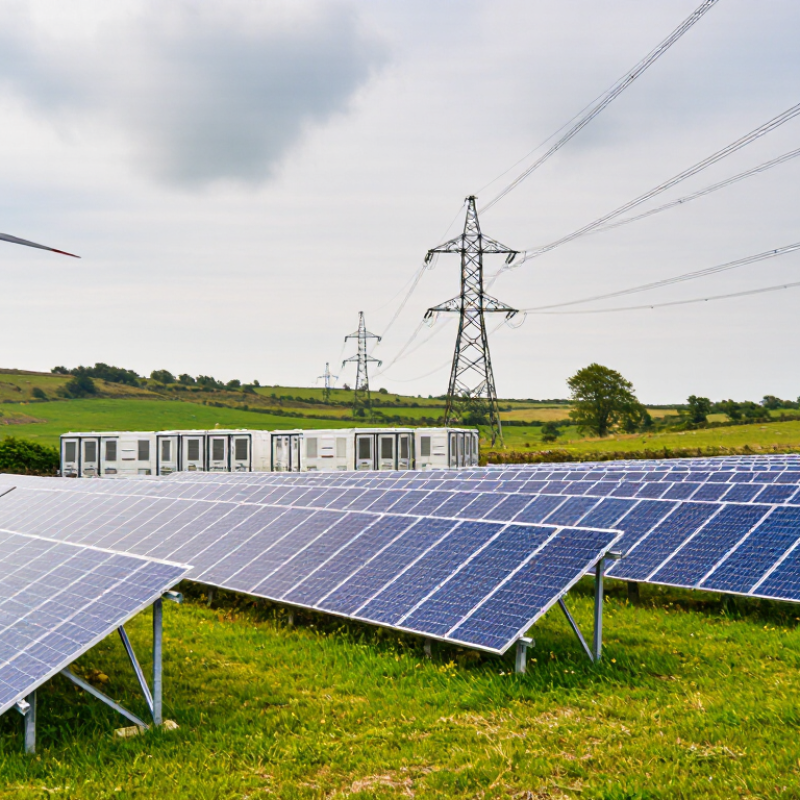
Ireland’s renewable energy market is expanding under a clear policy target: 80% renewable electricity by 2030. The Sustainable Energy Authority of Ireland reported that renewables supplied about 14% of Ireland’s total energy demand in 2022. Electricity is progressing faster, with wind providing a major share of generation. However, grid congestion, planning delays, and limited storage still slow development.
China’s role is mainly industrial rather than local ownership. The International Renewable Energy Agency recorded approximately 297.6 gigawatts of new Chinese renewable capacity in 2023. That represented nearly 63% of global additions. Chinese manufacturers can supply solar modules, battery systems, inverters, and selected wind components at competitive prices. Their scale may help Irish projects control costs. Yet price alone is not enough. Irish buyers must assess certification, grid-code compliance, cybersecurity, transport emissions, and long-term service capacity. The analysis can be uncomfortable: a low purchase price may create higher lifecycle costs.
Tips: Request independent factory audits and verified performance data. Check warranties under Ireland’s weather conditions, including strong winds and frequent rain. Compare full project costs, not only equipment prices. The European Commission’s energy-security guidance also supports diversified procurement, which reduces dependence on one supply route. This requires more paperwork. It is still necessary. A supplier with excellent production statistics may lack practical experience with Ireland’s planning process, local grid rules, or offshore conditions. That gap deserves careful review.
| Market or Supply Dimension | Relevant Technology or Supplier Group | Verified Data | Year | Implication for Ireland | Source |
|---|---|---|---|---|---|
| Ireland renewable electricity share | All renewable electricity technologies | Approximately 40% of Ireland’s electricity came from renewable sources | 2023 | Strong demand exists for additional generation, grid equipment, storage and balancing services. | SEAI renewable-energy statistics |
| Ireland’s leading renewable source | Onshore wind power | Wind generated about one-third of Ireland’s electricity in 2023 | 2023 | Wind remains the core market, while Chinese supply is more relevant to components, electrical equipment and selected balance-of-system products than to project development. | EirGrid electricity data |
| Irish wind capacity | Onshore wind farms and grid-connected wind assets | Ireland had more than 4 GW of installed wind capacity by the end of 2023 | 2023 | Potential suppliers must meet Irish grid-code, certification, service and spare-parts requirements. | EirGrid system statistics |
| Solar photovoltaic growth | Utility-scale and rooftop solar modules | Ireland’s installed solar capacity exceeded 1 GW during 2024 | 2024 | Chinese-made modules and related equipment can compete strongly on cost, but importers must verify certification, warranties and long-term service arrangements. | SEAI energy statistics |
| China’s solar manufacturing position | Polysilicon, wafers, solar cells and photovoltaic modules | China accounted for approximately 97% of global polysilicon production, 96% of wafers, 93% of cells and 83% of modules | 2023 | China is the dominant upstream and module-supply base for Ireland’s solar procurement market, although final supply may enter through other trading locations. | International Energy Agency |
| China’s wind-equipment scale | Wind turbines, generators, blades and drivetrain components | China installed approximately 75.9 GW of new wind capacity, representing about 65% of global additions | 2023 | Large domestic scale supports competitive manufacturing, but Irish deployment requires European certification, local support and compatibility with EU procurement rules. | Global Wind Energy Council |
| Battery-storage supply potential | Lithium-ion cells, battery containers, energy-management systems and converters | China produced more than 75% of the world’s lithium-ion batteries in 2023 | 2023 | Chinese battery supply can support Irish grid flexibility, but projects require compliance with EU battery, fire-safety, cybersecurity and grid-connection requirements. | International Energy Agency |
| Grid-integration equipment | Inverters, transformers, switchgear, power-conversion systems and monitoring equipment | No single public statistic identifies a China-only share of Ireland’s installed grid equipment | Current status | Procurement should be assessed project by project using certification, cybersecurity, interoperability, warranty and after-sales-service criteria. | Commission for Regulation of Utilities |
| Irish renewable-energy target | Renewable electricity deployment | Ireland has a legally established target of at least 80% renewable electricity by 2030 | 2030 target | The target creates continued demand for solar, wind, storage, transmission upgrades and digital energy-management systems. | Ireland Climate Action Plan |
| Recommended supplier-selection criteria | All Chinese-origin renewable-energy equipment | Technical compliance, lifecycle cost, bankability, product traceability, cybersecurity, warranty coverage, spare-parts availability and local service capability | Procurement standard | The most suitable supplier is not necessarily the lowest-cost supplier; project financeability and compliance are decisive in the Irish and wider EU market. | European standards framework |
Note: The table presents supplier categories and market-level evidence rather than company or brand rankings. China’s manufacturing shares are global indicators and should not be interpreted as the exact percentage of equipment installed in Ireland.