Finding energy projects worldwide is not a spreadsheet exercise alone. It means checking whether a promising site can connect to a reliable grid, attract credible partners, and withstand changing market conditions. A map may show abundant sunlight, wind, or water. It cannot show a delayed interconnection study or a community’s unanswered questions.
IRENA Director-General Francesco La Camera has said, “Renewables are the cheapest source of power today.” That observation helps explain the opportunity, but low generation costs do not make every project bankable. Sourcing still requires careful checks of resource data, land access, grid capacity, permits, financing, equipment supply, and the route to market. Details matter: a wind project’s measured speeds, a solar site’s seasonal output, or the distance to a substation can change its prospects.
This guide presents ten practical tips for finding and assessing opportunities across regions. It focuses on verifiable information, experienced local advisers, clear ownership records, and realistic schedules. These checks are useful, not infallible. Policy can shift. Forecasts can miss. Even a well-prepared project may stall, and that deserves honest attention. The aim is not to promise easy returns, but to help developers and investors ask sharper questions before committing time or capital to energy projects.
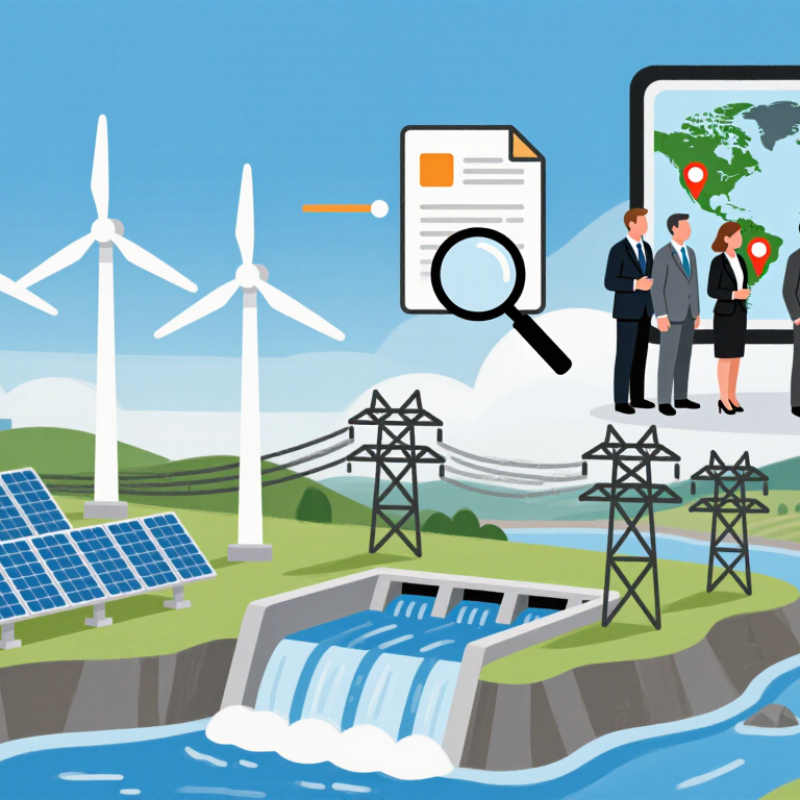
The International Energy Agency’s World Energy Investment 2024 report projected global energy investment above $3 trillion in 2024, with about $2 trillion directed toward clean energy. That headline is useful, but it can hide local gaps. A strong global sourcing map should compare project pipelines with grid capacity, permitting timelines, financing costs, and equipment access in each market. A sunny site is not automatically a viable project.
Look beyond announcements. IRENA reported 473 gigawatts of renewable capacity additions worldwide in 2023, a record. Yet capacity growth is uneven, and a national target does not guarantee a ready-to-build project. Check whether transmission plans, land access, and credible offtake arrangements match the proposed schedule. Request dated grid studies, not just attractive maps. Small details matter.
Compare markets using the same evidence, then adjust for local risk rather than forcing one global ranking. Track currency exposure, supplier concentration, and the time needed to connect projects to the grid. These checks can feel slow. They often reveal the real bottleneck. One imperfect point: public data may lag fast-moving projects, so verify critical figures directly with project counterparties before committing capital.
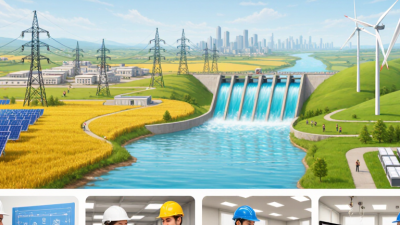
When sourcing energy projects, begin with regions where capital, grid access, and policy support overlap. The International Energy Agency’s World Energy Investment 2024 estimated that clean-energy investment would reach about $2 trillion that year, roughly twice fossil-fuel investment. But capital flows are concentrated; a global headline can hide weak local project pipelines.
Use the figure as a screening signal, not a promise of returns. The IEA identified China as the largest clean-energy investor, while the International Renewable Energy Agency reported 585 gigawatts of renewable capacity added worldwide in 2024. Those numbers show momentum, not guaranteed connections or revenues. Check transmission maps, interconnection queues, curtailment records, and local power-purchase terms. Check the wires. A sunny site can still wait years for grid access.
Then compare regions on permitting timelines, equipment availability, water stress, and currency exposure. Ask developers for dated permits, land records, resource studies, and realistic construction schedules. I would give grid evidence more weight than ambitious targets, though that may overlook early-stage markets. Investment reports are useful, but their estimates and categories differ. Verify each project’s data directly, and leave room for delays in your financial model.
The 473 GW of renewable capacity added worldwide in 2023 makes grid access a sourcing priority, not a late-stage detail. But new capacity does not mean every local network can absorb another project. Before comparing sites, ask the grid operator for current hosting-capacity data, connection timelines, and planned upgrades. Check whether figures refer to a nearby substation or the wider region; those are not interchangeable.
Request a preliminary interconnection study and examine the practical details: available transformer capacity, export limits, queue position, and likely curtailment. A site may look ideal on a map, yet require a long transmission line or costly substation work. Get upgrade estimates in writing where possible. Confirm what assumptions they depend on, because an estimate can change as other projects enter the queue.
Talk with the utility and an independent grid engineer, then compare their findings with local network plans. Ask how seasonal demand, storage, and neighboring projects affect deliverability. Keep a record of unanswered questions. It is tempting to treat a capacity figure as a firm promise. It isn’t. Recheck key data before committing, especially when grid studies are old or investment plans remain uncertain.
Global renewable power capacity grew by approximately 473 GW in 2023. Solar and wind accounted for most additions, making grid connection capacity, transmission access, and interconnection timelines important checks when evaluating energy projects. Figures are rounded; total may differ slightly from the sum of categories.
Source: International Renewable Energy Agency (IRENA), Renewable Capacity Statistics 2024.
Worldwide energy sourcing starts with a clear cost benchmark. IRENA’s Renewable Power Generation Costs in 2023 found that 81% of newly commissioned utility-scale renewable capacity had lower generation costs than fossil-fuel alternatives. That is a strong signal, not a guarantee.
IRENA reported global weighted-average costs of $0.044 per kilowatt-hour for new utility-scale solar and $0.033 for onshore wind. These figures help screen markets, but they are not turnkey project prices. A wind farm’s access road, a solar site’s grid connection, financing terms, and local capacity factors can reshape the final economics. Compare bids using the same assumptions, including currency, taxes, construction scope, and expected output.
The report also found that solar costs fell 12% year over year, while onshore wind costs declined 3%. Those averages can hide difficult local conditions. A low-cost project may still face transmission delays or limited storage. Not a guarantee. Ask suppliers for site-specific production estimates and transparent cost breakdowns, then test how results change when financing or equipment costs rise. The benchmark is useful. The assumptions deserve scrutiny.
A credible project begins with verified counterparties, not polished presentations. Confirm the legal entity, ownership structure, financial capacity, and authority of each project partner. Request current corporate records and references from lenders, contractors, or previous project participants. Check key details against original documents. Names can look similar.
Permits need equal scrutiny. Confirm which approvals are issued, which remain pending, and whether conditions apply to construction or operation. Review land rights, grid connection documents, environmental assessments, and permit expiry dates with qualified local advisers. A permit list is not proof of readiness. Compare it with the project schedule and site records. If documents conflict, pause and resolve the gap before committing capital.
Read contracts for practical exposure, not just headline prices. Check who bears delays, performance shortfalls, currency changes, and unexpected costs. Confirm that payment milestones match observable work, such as delivered equipment or completed site foundations. Map risks by location, including weather, logistics, political changes, and supply-chain concentration. Independent engineering, legal, and financial reviews can reveal issues that internal teams miss. They also take time. I would not treat a clean checklist as certainty; assumptions about construction timing or grid access can still prove wrong. Record open questions, name an accountable owner, and require evidence before financial close.
| No. | Diligence area | What to verify | Evidence and warning signs |
|---|---|---|---|
| 1 | Project ownership and rights | Confirm the project company’s legal existence, ownership structure, authority to develop the asset, and rights to the site, resource data, and project documents. | Review corporate records, share registers, land or lease documents, and any assignment or exclusivity terms. Investigate unclear beneficial ownership, overlapping site claims, or missing transfer rights. |
| 2 | Counterparty capability | Assess the developer’s relevant delivery record, staffing, financial capacity, governance, and ability to meet project milestones. | Check references, completed-project evidence, audited financial information where available, and litigation or insolvency records. Treat unsupported experience claims and undisclosed related-party arrangements as concerns. |
| 3 | Permits and approvals | Map all applicable planning, environmental, construction, generation, and operating approvals for the specific technology and jurisdiction. Confirm status, conditions, expiry dates, and transferability. | Validate permits with the responsible authorities or qualified local counsel. Distinguish issued approvals from applications or preliminary opinions; identify appeal periods and unmet conditions. |
| 4 | Land and community matters | Confirm site control, access, easements, boundary surveys, and any land-use restrictions. Review local consultation requirements and potential effects on nearby communities or Indigenous peoples. | Compare title or land records with surveyed boundaries and project layouts. Check for competing claims, unresolved resettlement issues, access gaps, or consultation commitments that are not documented. |
| 5 | Grid connection and power sales | Verify the connection route, available capacity, required network works, and applicable curtailment or dispatch rules. Review the offtake arrangement, pricing, term, credit support, and termination rights. | Obtain current grid studies and executed agreements where available. Separate a connection application or preliminary offer from a binding connection agreement; test exposure to congestion and payment default. |
| 6 | Resource and technical case | Review the quality, duration, and uncertainty of resource measurements, site conditions, technology selection, energy-yield assumptions, and operating-life estimates. | Use independent technical review and traceable source data. Check that production estimates account for losses, degradation, availability, and curtailment rather than relying only on headline capacity. |
| 7 | Contracts and delivery scope | Review development, engineering, procurement, construction, supply, and service contracts for scope boundaries, schedule, performance tests, warranties, delay remedies, and change control. | Confirm that interfaces and responsibility for grid works, permits, commissioning, and long-lead equipment are clear. Identify open commercial terms, broad exclusions, and remedies that may be difficult to enforce locally. |
| 8 | Financial model and funding | Reconcile the development budget, construction cost, operating costs, taxes, incentives, financing assumptions, and cash-flow timing. Test downside cases for schedule, output, price, and interest rates. | Trace key inputs to supporting documents and update assumptions for the relevant jurisdiction. Identify unfunded costs, optimistic tax or incentive assumptions, and material foreign-exchange or refinancing exposure. |
| 9 | Environmental and social risks | Check applicable environmental and social assessments, biodiversity and cultural-heritage constraints, labor and worker-safety plans, grievance channels, and monitoring obligations. | Compare assessment findings with permit conditions and lender requirements. Look for unmitigated impacts, incomplete baseline studies, unresolved grievances, or monitoring plans without clear responsibility. |
| 10 | Country, compliance, and closing readiness | Assess political, regulatory, currency-convertibility, tax, sanctions, anti-bribery, and dispute-enforcement risks. Confirm the conditions required for financing and financial close. | Use current country-specific legal and risk advice. Maintain a closing checklist with owners and deadlines; do not treat unsigned contracts, pending approvals, or unverified compliance checks as completed conditions. |
Note: Approval requirements, grid rules, contract enforceability, and financing conditions vary by jurisdiction, project type, and transaction structure. Confirm them with qualified local advisers and relevant authorities before committing capital.