Why Should Businesses Choose Renewable Power?
Businesses are rethinking how they buy electricity. A factory running compressors through the night, or a store cooling food through summer, depends on power that is affordable and dependable. Renewable power can help companies manage energy costs, reduce operational emissions, and respond to customer expectations. The economics have shifted. IRENA’s Renewable Power Generation Costs in 2023 reported that 81% of newly commissioned utility-scale renewable capacity produced electricity more cheaply than fossil-fuel alternatives. That figure is a useful signal, not a promise that every project will save money.
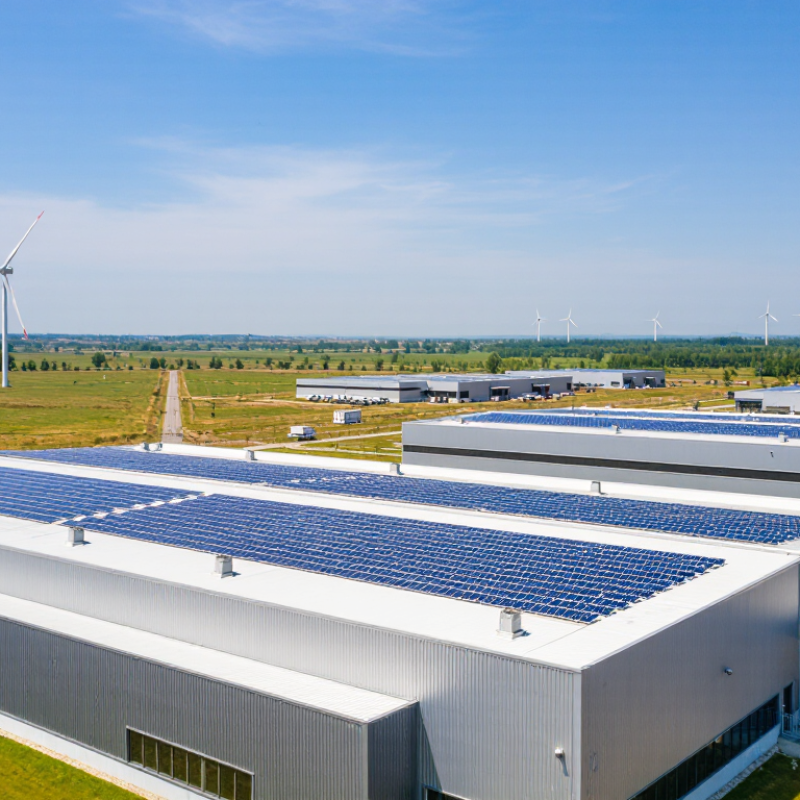
The market is also expanding quickly. The International Energy Agency’s Renewables 2024 report projected nearly 5,500 gigawatts of new renewable capacity worldwide between 2024 and 2030. For businesses, that growth creates more options, from on-site solar panels to long-term electricity contracts. A warehouse roof can host panels; a manufacturer might contract for wind power from a regional project. Each choice has practical trade-offs. Grid access, hourly demand, contract terms, and local conditions matter. Still, one uncomfortable detail deserves attention: renewable power does not automatically make a business resilient. Poor planning can leave gaps when sunlight fades or wind drops. Companies need to assess their load profiles, backup arrangements, and supplier claims before committing. The strongest case is specific: measured against a company’s actual bills, sites, and energy needs.
Define Renewable Power: Solar, Wind, Hydropower, and Geothermal
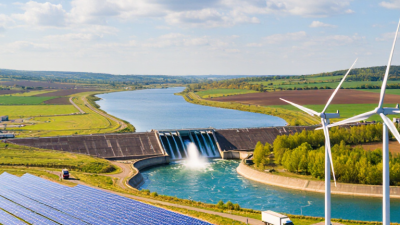
Renewable power is electricity produced from energy sources that are naturally replenished. The main sources are sunlight, moving air, flowing water, and heat beneath the Earth’s surface. Each works differently, so the term describes a family of technologies, not one single system.
Solar panels turn sunlight into electricity, often on rooftops or open land. Cloudy afternoons can reduce their output. Wind turbines use moving air to spin generators, but production changes with wind conditions. Hydropower captures energy from flowing or falling water, commonly through turbines at dams. Geothermal systems draw on underground heat for electricity or direct heating. The local resource matters.
For a business, these differences affect costs, reliability, and site choices. A warehouse with an unshaded roof may suit solar, while a facility near a steady water or geothermal resource may have other options. There are trade-offs. Dams can alter river habitats, and renewable projects still need land, equipment, and grid connections. Even a sunny site may not generate power when a business needs it most. Understanding how each source works helps companies ask better questions about their electricity supply and operating needs.
Why Should Businesses Choose Renewable Power? — Define Renewable Power: Solar, Wind, Hydropower, and Geothermal
| Power Source |
How It Works |
Business Applications |
Potential Business Benefits |
Considerations |
Median Lifecycle Emissions |
| Solar |
Solar photovoltaic panels convert sunlight directly into electricity. Solar thermal systems use sunlight to produce heat. |
Rooftop or on-site generation, solar carports, and utility-scale power purchased through an electricity contract. |
On-site systems can generate power where it is used and may reduce purchases from the grid when sunlight is available. |
Output varies with daylight, weather, season, and location. Batteries or grid supply can help cover periods without solar generation. |
48 g CO₂e/kWh |
| Wind |
Wind turns turbine blades, which drive a generator to produce electricity. |
Electricity from onshore or offshore wind farms, commonly obtained through grid supply or long-term power purchase agreements. |
Can provide substantial electricity from a renewable resource and diversify a business’s energy supply. |
Generation depends on wind conditions and suitable sites. Projects may require transmission access and careful consideration of local impacts. |
11 g CO₂e/kWh |
| Hydropower |
Moving or falling water turns turbines connected to generators. Some facilities can store water for later electricity generation. |
Grid electricity sourced from hydropower; in suitable locations, small-scale projects may serve individual operations. |
Reservoir-based facilities can provide dispatchable electricity, helping match generation with demand. |
Availability depends on water resources and site conditions. Reservoir projects can affect river ecosystems and communities; emissions vary by facility. |
24 g CO₂e/kWh |
| Geothermal |
Heat from within the Earth produces steam or heats a working fluid that drives a turbine. Geothermal heat can also be used directly. |
Electricity generation in suitable regions, direct heating for facilities, and geothermal heat-pump systems for buildings. |
Geothermal plants can produce electricity independently of sunlight and wind conditions; heat pumps can provide efficient building heating and cooling. |
Electricity projects are location-dependent and require exploration and drilling. Heat-pump performance depends on system design and site conditions. |
38 g CO₂e/kWh |
| Why businesses consider renewable power: It can help reduce electricity-related greenhouse gas emissions and diversify energy procurement. Actual costs, savings, emissions, and reliability depend on the technology, location, contract, grid mix, and project design. Lifecycle emission figures are median estimates reported by the IPCC; actual values vary among projects. |
Compare Costs: 81% of 2023 Renewable Capacity Undercut Fossil Power (IRENA)
For businesses reviewing their energy budgets, the cost comparison is hard to ignore. IRENA reported that 81% of renewable power capacity commissioned in 2023 generated electricity at a lower cost than the cheapest fossil-fuel alternative. That figure covers new capacity, not every company’s electricity bill. Still, it shows how often wind and solar have become competitive on generation costs.
A warehouse with a broad roof, for example, may use daytime solar power to reduce purchases from the grid. A manufacturer running overnight may need storage, grid supply, or a carefully matched energy contract. Those details affect the final price. The lowest generation cost does not automatically mean the lowest total cost for every site. Connection fees, financing, local weather, and backup needs matter too.
The comparison is useful. It is not a promise. Businesses should check local tariffs and estimate costs across the project’s lifetime, rather than relying on one headline figure. Renewable projects can also bring more predictable energy costs, though forecasts can miss. That part deserves honest scrutiny. A sound decision starts with real consumption data, clear assumptions, and a comparison against available fossil-based power.
Quantify Emissions: Wind 11 vs. Coal 820 g CO₂e/kWh (IPCC)
A kilowatt-hour from a coal plant carries a much larger climate footprint than one from a wind turbine. The IPCC estimates about 820 grams of carbon dioxide equivalent per kilowatt-hour for coal, compared with roughly 11 grams for wind. These are lifecycle figures, not just emissions from burning fuel. They account for stages such as equipment production, construction, and operation. The gap is striking: coal’s estimate is about 75 times higher. That difference matters when a business uses electricity every hour to run lights, refrigeration, servers, or machinery.
For a factory consuming millions of kilowatt-hours, choosing renewable power can reduce the emissions associated with its electricity use. A company can compare its bills with measured consumption, then check how its renewable supply is documented. Details matter. The IPCC figures are estimates, not a promise that every wind project produces exactly 11 grams or every coal plant produces exactly 820. Results vary with technology, location, and assessment methods. I would avoid treating one comparison as a complete climate plan; it leaves out other business emissions, and clean power can be harder to secure at every hour. Still, the contrast gives decision-makers a useful starting point—and a reason to ask better questions.
Choose Procurement: PPAs, Green Tariffs, and On-Site Generation
Choosing renewable power starts with understanding when and how a business uses electricity. A power purchase agreement (PPA) typically links a buyer to renewable generation through a long-term contract. Some arrangements deliver electricity directly; others settle financially while the business keeps buying power from its usual supplier. Contract length, pricing terms, and volume commitments matter. A warehouse with steady demand may be a better fit than a small office with highly variable use.
Green tariffs can offer a simpler route. A supplier may match a business’s electricity use with renewable generation or certificates, depending on the tariff. Ask what is being matched, how claims are verified, and whether the arrangement supports new projects. The details vary by market. Read the fine print.
On-site generation, such as rooftop solar, can reduce grid purchases and make energy use more visible. A facilities team might compare midday production with the building’s actual demand, then assess roof condition, maintenance, and storage needs. It is not automatically the cheapest option. Shading, seasonal output, and upfront costs can change the calculation. Procurement teams should compare realistic scenarios, not just headline rates; even a careful spreadsheet can miss operational surprises.
Gauge Market Scale: Renewables Supplied 30% of Global Electricity in 2023 (IEA)
In 2023, renewable sources supplied 30% of global electricity, according to the International Energy Agency (IEA). That share is more than a climate statistic; it signals a power market changing at substantial scale. For businesses, renewables are no longer a niche option discussed only in sustainability reports. Procurement teams can evaluate them alongside price stability, supply security, and emissions targets. That shift matters. An office, warehouse, or factory can compare electricity options against its actual demand, not just annual totals.
Still, 30% does not mean every site can rely on renewable power at every hour. Wind and solar output varies with weather and location, while grid capacity and contract terms differ. A practical assessment should examine demand patterns, delivery arrangements, backup needs, and the basis for environmental claims. Ask for clear accounting. Where possible, compare bills and generation data over time; one attractive month can mislead. Renewable power may support cost planning and lower operational emissions, but results depend on the contract and local system. Choosing it is not an instant fix, and the details can be tedious. That friction deserves attention.